Microscopic identity of two-level defects in qubit oxides
79No. 38 in all physics · No. 5 in Condensed Matter Physics
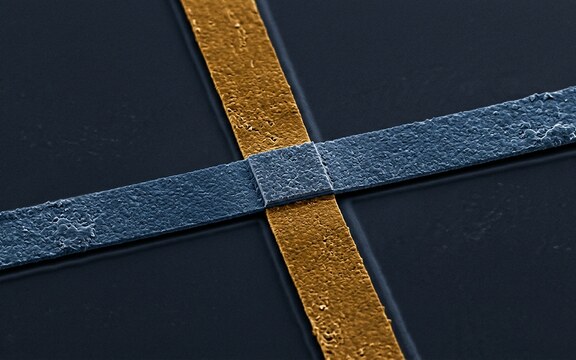
Superconducting qubits lose energy to defects in the thin oxide layers in and around the circuit, which behave like the tunneling defects of glasses. Which atoms or trapped charges form these defects is debated.
Status in the literature
Unverified note: it names recent work and was partly written without a live literature search; it awaits a check by an editor.
A 2026 ab initio study proposes hydrogen tunneling in $\mathrm{Nb_2O_5}$ and $\mathrm{Ta_2O_5}$ as the defects (Mendez and Arias, arXiv 2603.17194); experimental confirmation is lacking.
No solutions, ideas or subproblems yet.
See also
- Related Why do qubit energy-relaxation times fluctuate over hours?
- Related What atoms tunnel in the two-level systems of amorphous silica?
- Related Which interface dominates dielectric loss in millisecond transmons?
Details, signature and history
- Kind
- Well-posed question
- Answer
- Identification
- Posed
- 2005
- Topic review
- C. Muller, J. H. Cole and J. Lisenfeld, Towards understanding two-level-systems in amorphous solids: insights from quantum circuits, Reports on Progress in Physics, 2019. Link
- Record
- Revision 2 · notation repaired by the platform · compiled by AI, not yet reviewed by an editor
- Batch approval
- Approved for the batch by Victor Galitski (ORCID 0000-0001-5532-1096) · approval record · bundle This approves the batch, not each problem (what it means).
- Earlier revisions
- revision 1 bundle
Proof
- Fingerprint
- 380e59622bb0…
- Public log
- Entry 1,139, in checkpoint 2,123
- In the log by
- Block 969,698, 2026-10-03
This text was in the PubPhys log by that date. The date says nothing about when the problem was first posed.
Comments (0)
Comments are not records: they are not signed, stamped or logged. How comments work
No comments yet.
Sign in to comment.