Physical mechanism of normal-tissue sparing at ultra-high dose rate
76No. 56 in all physics · No. 3 in Medical and Radiation Physics
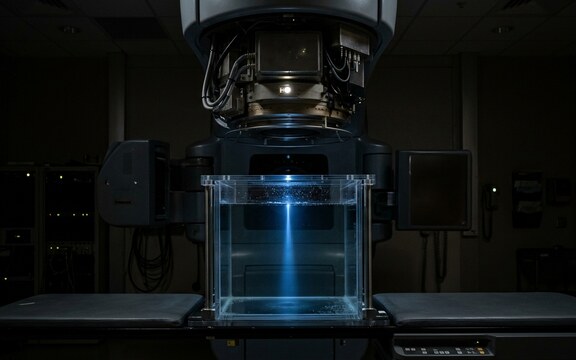
Healthy tissue survives better when the dose arrives in a flash rather than slowly. The task is to find the physical or chemical process responsible.
Status in the literature
Unverified note: it names recent work and was partly written without a live literature search; it awaits a check by an editor.
As of 2025 oxygen depletion alone is widely judged insufficient and no consensus mechanism exists.
Subproblems (2)
-
43Inter-track radical recombination rates at FLASH dose rates a special case · open
-
40Can radiolytic oxygen depletion quantitatively explain FLASH sparing? a special case · open
See also
- Related Beam parameters that switch the FLASH effect on
- Related Does the FLASH sparing effect occur in human normal tissue?
Details, signature and history
- Kind
- Phenomenon to explain
- Answer
- Mechanism
- Posed
- 2014
- Topic review
- Favaudon et al., Ultrahigh dose-rate FLASH irradiation increases the differential response between normal and tumor tissue in mice, Science Translational Medicine, 2014. Link
- Record
- Revision 1 · imported from the seed collection · compiled by AI, not yet reviewed by an editor
Proof
- Fingerprint
- 4dfc64869876…
- Public log
- Entry 1,682, in checkpoint 2,123
- In the log by
- Block 969,698, 2026-10-03
This text was in the PubPhys log by that date. The date says nothing about when the problem was first posed.
Comments (0)
Comments are not records: they are not signed, stamped or logged. How comments work
No comments yet.
Sign in to comment.