This browser is older than PubPhys supports. Every page can be read, but signing in to contribute, voting and signing need Safari 15.4, Chrome or Edge 99, Firefox 97 or newer. Browsers
All problems
1,762 problems
Starting order drafted by AI. Votes change it. How ranking works
-
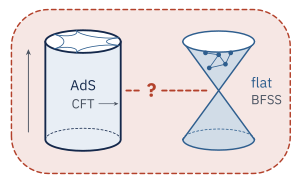
Exact definitions of string and M-theory exist for asymptotically AdS spacetimes (dual CFTs) and for flat space in light-cone frame (BFSS matrix theory), each tied to asymptotic boundary conditions. Find a formulation whose Hilbert space and observables do not presuppose a background and which contains these as special sectors.
-
AI-generated illustration
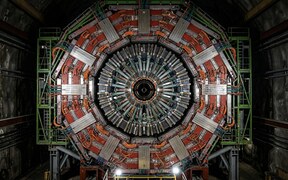
In composite pseudo-Goldstone Higgs models, Higgs couplings to W, Z and fermions deviate from SM values by $\mid \kappa - 1 \mid \sim \xi = v^{2}/f^{2}$ up to $O(1)$ factors, with f the compositeness scale. Determine whether $\xi > 0$ by measuring $\kappa_V$ and $\kappa_f$ to 0.1 to 1 percent, or find the associated resonances of mass $m_\rho \sim g_\rho f$ with $1 < g_\rho < 4\pi$.
-
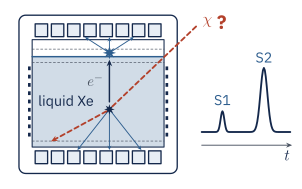
Does a particle of mass $1\,\mathrm{GeV}\text{ to }100\,\mathrm{TeV}$, produced by thermal freeze-out with annihilation cross section $\langle \sigma v\rangle \sim 3 \times 10^{-26}\,\mathrm{cm}^{3}/\mathrm{s}$, make up $\Omega_c$? Answer yes (a detection of nuclear recoils, annihilation products or collider production consistent with the thermal cross section) or no for named benchmarks: exclusion of Higgs-portal and Z-portal thermal relics by direct detection, and of the pure wino ($\sim 2.9\,\mathrm{TeV}$) and pure Higgsino ($\sim 1.1\,\mathrm{TeV}$) thermal relics by gamma-ray line and continuum searches from the Galactic Center. Thermal relics with loop-suppressed nuclear couplings (pure Higgsino, $\sigma_{\mathrm{SI}} \sim 10^{-49}\text{ to }10^{-48}\,\mathrm{cm}^{2}$) lie at or below the xenon neutrino background floor, so direct detection alone cannot close the question.
-
AI-generated illustration
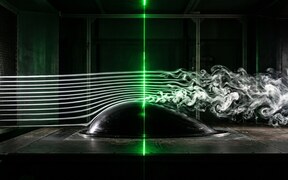
For turbulent boundary layers separating under an adverse pressure gradient from a smooth surface (benchmarks such as $2\mathrm{D}\ \text{and}\ 3\mathrm{D}$ smooth bumps at $\mathrm{Re}_L \sim 10^6\ \text{to}\ 10^7$), identify which non-local or history information absent from single-point Reynolds-averaged equations (for example upstream pressure-gradient history, transport of Reynolds-stress anisotropy, or large-scale unsteadiness) is needed to predict separation and reattachment locations within experimental uncertainty. Answer: the minimal added information, demonstrated by a model that uses it and predicts an unseen geometry blind.
-
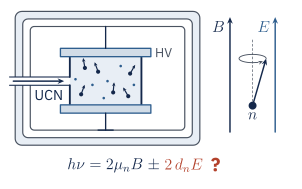
The best bound is $\left|d_n\right| < 1.8 \times 10^{-26}\,e\,\mathrm{cm}$ (90% CL, PSI 2020) using ultracold neutrons with a Hg-199 comagnetometer. Determine whether $d_n$ is nonzero at the $10^{-27}\,e\,\mathrm{cm}$ level, which corresponds to the QCD vacuum angle $\left|\theta_{\mathrm{bar}}\right|$ of order $10^{-11}$ (using $d_n$ of about $10^{-16}\,\theta_{\mathrm{bar}}\,e\,\mathrm{cm}$).
-

AI-generated illustration
Quantify the maximum probability gain over ETAS achievable for $M \ge 6$ earthquakes in windows of about 30 days and 100 km, using any combination of seismic, geodetic, hydrological or electromagnetic data. An answer is either a prospectively tested forecast with gain significantly above 1 in a CSEP-type experiment (CSEP: a community testing framework for earthquake forecasts), or an information-theoretic bound showing gains are limited.
-
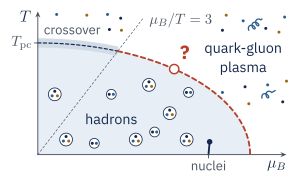
Determine whether the chiral crossover line $T_{\mathrm{pc}}(\mu_B)$ ($T_{\mathrm{pc}}(0)$ about $156\,\mathrm{MeV}$, $\mu_B$ the baryon chemical potential) ends at a critical point $(T_c, \mu_B,c)$ beyond which the transition is first order, and locate it. Lattice QCD disfavors a critical point at $\mu_B/T$ below about 3. Answer: yes or no, and $(T_c, \mu_B,c)$ with uncertainty.
-
AI-generated illustration
Can radiation-induced error bursts in superconducting chips be made rare enough?
Partially resolved 75In transmon arrays, ionizing-radiation impacts in the substrate produce phonons that break Cooper pairs and raise the quasiparticle density near Josephson junctions, causing $T1$ drops and frequency shifts over regions of order $\mathrm{cm}^2$ for times of about 1 to 30 ms. Establish the quantitative chain (energy deposition, phonon transport, quasiparticle generation, trapping and recombination) that sets the burst rate and footprint, and determine whether gap engineering, phonon traps and shielding can lower the rate of bursts that defeat a distance-d surface-code patch to the level required for logical error rates near $10^{-12}$ per cycle.
-
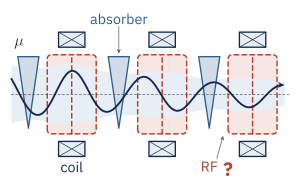
MICE demonstrated transverse (4D) emittance reduction through a single absorber without RF re-acceleration. Demonstrate net 6D emittance reduction over several cells with RF, including emittance exchange via wedges or dispersion, and measured agreement with simulation at the percent level.
-

AI-generated illustration
In FCC single crystals (Cu, Al, Ni) the stage II hardening rate $\theta_{II} = d \tau / d \gamma$ is of order $\mu/200$ to $\mu/300$ ($\mu$ the shear modulus), nearly independent of material and temperature, and dislocation cells obey the similitude relation $\Lambda = K \mu b / \tau$ with $K$ of order 10 ($b$ the Burgers vector). Derive $\theta_{II}$ and the emergence and wavelength of cell structures from discrete or continuum dislocation dynamics without fitted hardening parameters. An answer is computed $\theta_{II}/\mu$ and $K$ within 20 percent of experiment.
-
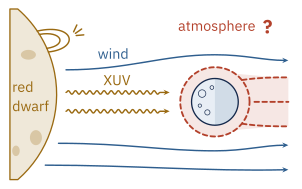
For rocky planets in and near the habitable zones of M dwarfs (e.g., TRAPPIST-1 e, f, g), determine whether secondary atmospheres with surface pressure $\ge 10^{5}\,\mathrm{dyn}/\mathrm{cm}^{2}$ ($0.1\,\mathrm{bar}$) survive XUV-driven escape, flares and stellar winds over Gyr. The answer is yes or no for a defined class of planets, from thermal emission and transmission measurements.
-

AI-generated illustration
Measure or bound $\tau(p \to e+ \pi0)/B$, currently $> 2.4 \times 10^{34}\,\mathrm{yr}$ (Super-Kamiokande, 2020, 90 percent CL). Non-supersymmetric $\mathrm{SO}(10)$ models with intermediate scales typically predict $10^{34}\text{ to }10^{36}\,\mathrm{yr}$. An answer is a detection or a limit near $10^{35}\,\mathrm{yr}$.
-
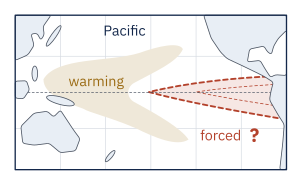
Over roughly 1980 to 2020 the eastern equatorial Pacific and Southern Ocean warmed less than in coupled models, making the effective historical feedback more negative than the long-term feedback. Determine whether this sea surface temperature pattern is forced (and will persist) or internal variability (and will reverse), and the resulting correction to ECS inferred from historical warming. An answer is an attribution of the pattern with uncertainty and the implied pattern-effect correction.
-
AI-generated illustration
Determine $m_{\mathrm{lightest}}$, or equivalently $m_{\beta}=(\sum\left|U_{ei}\right|^{2}m_i^{2})^{1/2}$ and $\sum m_{\nu}$. KATRIN (2025) gives $m_{\beta}<0.45\ \mathrm{eV}$ (90 percent CL); oscillations require $\sum m_{\nu}\ge \sim 0.059\ \mathrm{eV}$ (normal) or $\sim 0.10\ \mathrm{eV}$ (inverted). An answer is a nonzero value with $\sim 20\%$ uncertainty or a consistent upper limit across laboratory and cosmology.
-
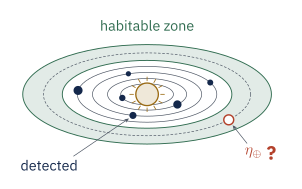
Measure $\eta_{\mathrm{Earth}}$, the number per G and K dwarf of planets with $R = 0.5-1.5\,R_{\mathrm{earth}}$ in the conservative habitable zone. Kepler-based estimates span roughly 0.05-0.6 because of extrapolation in period and radius and stellar property uncertainties. The answer is a value with uncertainty below $\sim 30\%$.
-

AI-generated illustration
For the E4 (Janus) state of FeMoco, determine the positions of the four added hydrogens (bridging hydrides, protonated sulfides), the site of $\mathrm{N_2}$ binding (Fe2/Fe6 face, Mo, or after sulfide displacement), and the energetics of reductive elimination of $\mathrm{H_2}$ coupled to $\mathrm{N_2}$ binding. An answer is a structure and mechanism consistent with ENDOR/EPR data and with converged electronic-structure energetics.
-
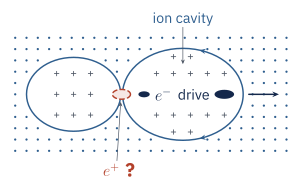
In the nonlinear blowout regime, plasma electrons are expelled and the ion column focuses electrons but defocuses positrons. Find a wake configuration (hollow channel, finite-radius plasma, electron filament, magnetized wake, quasi-linear wake) that simultaneously gives gradient above $10^{7}\,\mathrm{eV}/\mathrm{cm}$, energy-transfer efficiency above 30 percent, rms energy spread below 1 percent and collider-level emittance preservation. An answer is a demonstrated configuration or a proof that the requirements are incompatible.
-
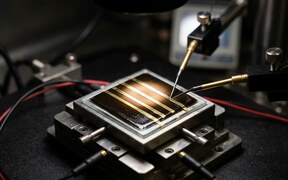
AI-generated illustration
Determine the dominant mobile species (halide vacancies, halide interstitials, organic cations) in MAPbI3 and FAPbI3 under operation, their densities and activation energies (reported values span approximately 0.1 to 0.6 eV), and the mechanism of light-enhanced ionic conductivity. Measurements must separate ionic from electronic signals (e.g. impedance with tracer diffusion) and be matched to first-principles migration barriers. An answer is the identified species with activation energies and the photo-enhancement mechanism.
-
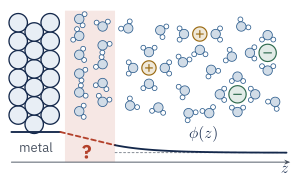
For Pt(111) and Au(111) in dilute aqueous perchlorate or fluoride electrolyte at 300 K, compute from first principles the potential of zero charge, the water orientation profile and the differential capacitance $C(\phi)$ as a function of electrode potential $\phi$, including the capacitance maximum near the potential of zero charge measured on Pt(111) and the Gouy-Chapman minimum at the potential of zero charge measured on Au(111) in dilute electrolyte. An answer is a simulation at fixed electrode potential that reproduces the measured potential of zero charge within $3.3 \times 10^{-4}\ \mathrm{statvolt}$ and $C(\phi)$ within 20 percent.
-

AI-generated illustration
In a Fabry-Perot interferometer at $\nu = 5/2$ (GaAs) or at even-denominator states in bilayer graphene, demonstrate the even-odd effect: Aharonov-Bohm oscillations of $e/4$ quasiparticles vanish when the enclosed number of $e/4$ quasiparticles is odd and reappear, with phase shifts given by Ising braiding, when it is even. An answer is reproducible data in independent devices that exclude Coulomb-dominated and Abelian explanations.
-
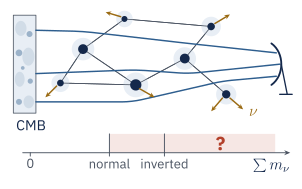
Measure sum $m_\nu$ with uncertainty $\sigma \le 0.015\,\mathrm{eV}$ from CMB lensing, galaxy clustering and BAO, with the reionization optical depth $\tau$ measured independently to $\sigma(\tau) \sim 0.002$. An answer is a value that also discriminates normal from inverted ordering.
-
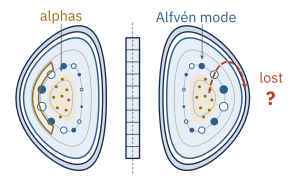
$3.5\,\mathrm{MeV}$ alphas with speeds comparable to the Alfven speed can drive toroidal Alfven eigenmodes and energetic-particle modes. Compute the steady-state alpha redistribution and the fraction of alpha power lost to the wall in the ITER $Q = 10$ scenario, including nonlinear saturation (wave-wave coupling, phase-space structures) and interaction with microturbulence. An answer is the alpha power loss fraction with uncertainty, from models validated on fast-ion transport in present devices.
-

AI-generated illustration
How the O-O bond forms in photosystem II
Partially resolved 73For the $\mathrm{Mn_4CaO_5}$ oxygen-evolving complex of photosystem II, identify the O-O bond-forming step in the S3 to S4 to S0 transition: which oxygen atoms couple (O5 with the inserted O6, or a water-derived ligand), the mechanism (oxyl-oxo radical coupling or nucleophilic attack), the Mn oxidation and spin states at the transition state, and its barrier consistent with the measured millisecond kinetics. An answer is a mechanism supported by time-resolved structural and spectroscopic data and by converged electronic-structure calculations.
-
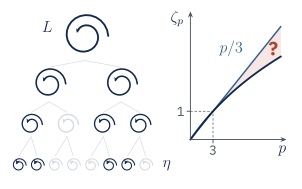
System: statistically stationary, homogeneous, isotropic turbulence of the 3D incompressible Navier-Stokes equations at $\mathrm{Re}_{\lambda} \to \infty$. Quantity: inertial-range exponents $\zeta_{p}$ in S_p(r) = <|delta_r u|^p> ~ r^zeta_p, which deviate from the Kolmogorov 1941 value $p/3$ (measured $\zeta_{6} \sim 1.78$, approximately). Answer: a derivation of zeta_p from the Navier-Stokes equations, or from an approximation with controlled error, that reproduces measured values for p up to about 10 and identifies the flow structures responsible.
-

AI-generated illustration
Microscopic basis of Archard's wear law
Partially resolved 73Archard's law $V = K N s / H$ (wear volume V, load N, sliding distance s, hardness H) has an empirical dimensionless coefficient K spanning roughly $10^{-8} \text{ to } 10^{-2}$. Derive K from asperity-scale mechanisms, including the critical junction size $d*$ proportional to $G w / \tau_j^{2}$ (shear modulus G, surface energy w, junction strength $\tau_j$) below which junctions deform plastically instead of shedding debris, and predict wear rates for specified material pairs.
-
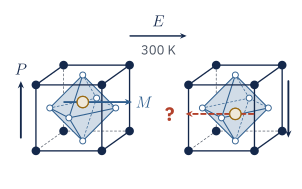
Identify a single-phase compound with ferroelectric polarization above about $3 \times 10^{3}\ \mathrm{statC}/\mathrm{cm}^{2}$ and net magnetization above $10\ \mathrm{emu}/\mathrm{cm}^{3}$ at $T = 300\ \mathrm{K}$, in which an electric field deterministically reverses (or rotates by $90\ \text{degrees}$) the magnetization. An answer is a material with measured $P$, $M$ and demonstrated electric-field reversal of $M$ at $300\ \mathrm{K}$ without a ferromagnetic overlayer.
-
AI-generated illustration
Within a UV-complete theory, identify the sector of the Hilbert space that describes a 4D Schwarzschild black hole of mass $M$ and compute the logarithm of its dimension, reproducing $S = 4 \pi G M^2/(\hbar c)$ (entropy in units of $k_B$). An answer is a controlled microscopic count valid away from supersymmetry and extremality.
-
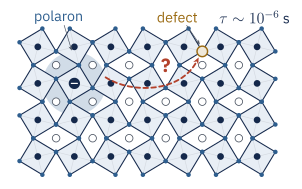
In MAPbI3, FAPbI3 and $\mathrm{CsPbBr_3}$, nonradiative lifetimes reach about $10^{-6}$ s at trap densities of order $10^{15}\ \text{to}\ 10^{16}\,\mathrm{cm}^{-3}$ despite modest mobilities. Determine which mechanism dominates the suppression of Shockley-Read-Hall (defect-mediated) recombination: shallow intrinsic defect levels from antibonding valence-band character, large-polaron screening of capture, dynamic disorder reducing capture cross sections, or spin-split (Rashba) band edges. An answer is a ranking of mechanisms with first-principles nonadiabatic capture rates matching measured lifetimes versus $T$ and composition.
-
AI-generated illustration
Lattice results show the SM electroweak transition is a crossover for $m_h = 125\,\mathrm{GeV}$. Determine whether nature has BSM scalars or couplings that make it strongly first order, $v(T_c)/T_c > \sim 1$. An answer identifies the order of the transition from measured Higgs potential parameters or excludes all first-order scenarios with a singlet or doublet extension.
-
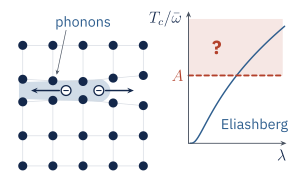
Within Migdal-Eliashberg theory and beyond it, determine whether $k_B T_c \le A \hbar \omega_{\mathrm{bar}}$ holds with a universal constant A ($A \sim 0.1$ argued from the breakdown of Migdal theory at strong coupling), and combine it with bounds on the highest phonon frequency in terms of the electron mass, charge and Planck constant to give a material-independent $T_c$ ceiling. An answer is a theorem with stated assumptions, or a model counterexample with controlled $T_c$ above the bound.